
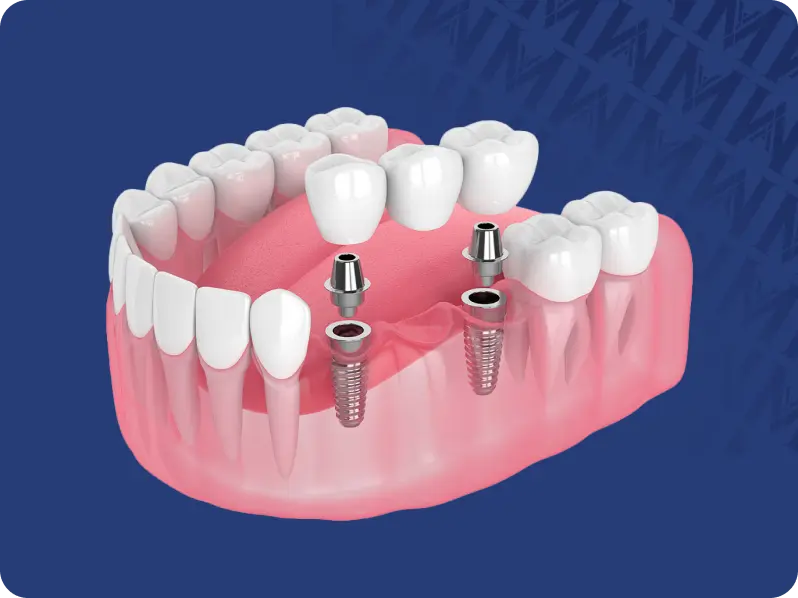
Dental implants are the gold standard for replacing missing teeth, offering a permanent solution that looks, feels, and functions like natural teeth. Whether you've lost a single tooth to decay or need full-mouth restoration, implants provide stability that dentures and bridges simply cannot match.
Dental implants are the gold standard for replacing missing teeth, offering a permanent solution that looks, feels, and functions like natural teeth. Whether you've lost a single tooth to decay or need full-mouth restoration, implants provide stability that dentures and bridges simply cannot match.
Key Takeaways
- Dental implants replace missing teeth with a titanium post, abutment, and custom crown that fuse permanently with your jawbone
- Success rates exceed 95% when performed by qualified implant specialists
- A single implant costs $3,000–$5,500 in the USA compared to €300–€1,150 in Turkey, offering a 60–70% cost saving
- Most healthy adults qualify for implants, though bone grafting may be required for patients with jawbone loss
- The full process takes 3–6 months, and the implant post can last a lifetime with proper care
What are dental implants?
Dental implants are titanium posts surgically placed into the jawbone to serve as artificial tooth roots. Over several months, a process called osseointegration allows the implant to fuse with the bone tissue, creating a stable base for replacement teeth. This strong, permanent bond makes implants the closest option to natural teeth available today.
Unlike removable dentures that sit on top of the gums, implants become part of your anatomy. They don't slip, click, or require adhesives. And unlike bridges, they don't require grinding down healthy neighbouring teeth for support.
How do dental implants work?
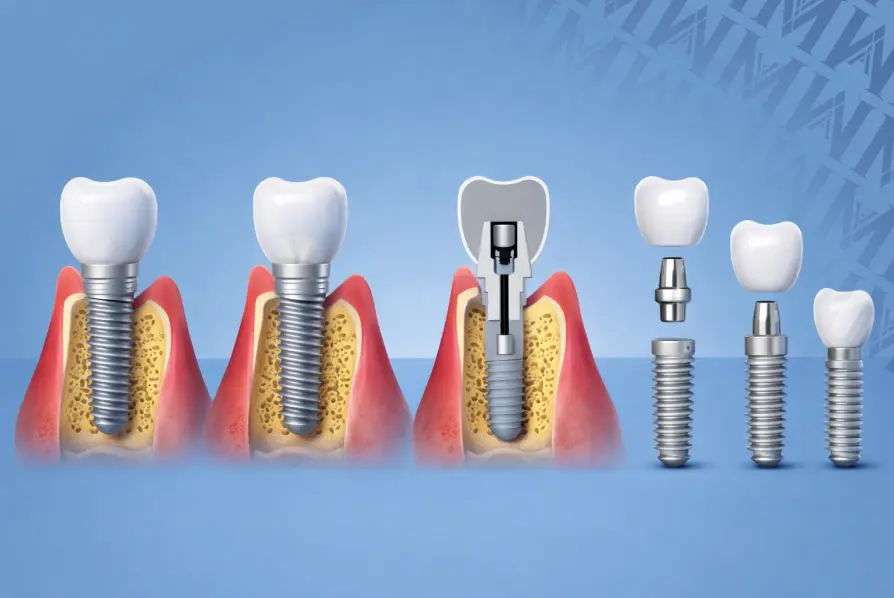
The dental implant system has three main parts working together. The implant post is a small titanium screw placed directly into your jawbone. Titanium is biocompatible, meaning your body accepts it without rejection. Over 3 to 6 months, your bone cells grow around the titanium and bond with it in a process called osseointegration.
After healing, the abutment connects to the top of the implant post. This piece comes through the gum line and holds the final restoration in place. The prosthetic crown, bridge, or denture then attaches to the abutment, completing your new tooth.
The result is a replacement tooth anchored as securely as your natural teeth once were. You can bite, chew, and speak with complete confidence.
Dental Implants vs. Dentures vs. Bridges
Choosing between tooth replacement options depends on your situation, budget, and long-term goals. Here's how implants compare to traditional alternatives:
| Factor | Dental Implants | Dentures | Bridges |
|---|---|---|---|
| Longevity | 20+ years, often a lifetime | 5–7 years before replacement | 10–15 years before replacement |
| Bone Preservation | Stimulates jawbone, prevents bone loss | Allows continued bone deterioration | Allows continued bone deterioration |
| Maintenance | Brush and floss like natural teeth | Requires removal, soaking, special cleaning | Needs floss threaders or water flossers |
| Comfort | Feels like your own teeth | Can slip, cause sore spots, affect taste | Feels secure but may trap food |
| Cost Over Time | Higher upfront, more economical long-term | Lower upfront costs, accumulate with replacements | Moderate upfront cost, replacement costs add up |
| Adjacent Teeth | Stands independently, no impact on other teeth | Clasps can stress surrounding teeth | Requires filing down healthy teeth on either side |
Types of Dental Implants
Dental implants come in several types designed for different clinical situations. The type recommended for you depends on your jawbone quality, the number of missing teeth, and your overall oral health.
| Dental Implant Type | Dental Implant Placement | Best For |
|---|---|---|
| Endosteal | Directly into the jawbone | Most patients with adequate bone density |
| Subperiosteal | On top of the jawbone | Patients with insufficient bone who can't undergo grafting |
| Zygomatic | Anchored in the cheekbone | Severe upper jaw bone loss |
| Single Tooth | One implant, one crown | Individual missing teeth |
| Multiple Implants | 2+ implants supporting a bridge | Several adjacent missing teeth |
| All-on-4 / All-on-6 | 4–6 implants per arch | Full mouth restoration |
Endosteal Implants (Most Common)
Endosteal implants are the most common choice for patients. A titanium post is inserted directly into the jawbone during a simple surgery. After the bone attaches to the post, a single crown can be placed on top.
Endosteal implants require sufficient bone height and density. If bone loss is present, bone grafting can help create a stable foundation. Success rates for endosteal implants exceed 95% in healthy patients.
Subperiosteal Implants
Subperiosteal implants are placed on top of the jawbone, not inside it. A metal frame sits under the gum tissue and rests on the surface of the bone. Posts connected to the frame extend through the gums to support prosthetic teeth.
This option is designed for patients with insufficient bone who cannot or prefer not to undergo bone grafting. However, subperiosteal implants are used less frequently today due to major advancements in modern bone grafting techniques.
Zygomatic Implants
Zygomatic implants are a specialized solution for patients with severe upper jaw bone loss. Instead of being placed in the maxillary bone, these longer implants anchor into the zygomatic bone (cheekbone).
This technique eliminates the need for extensive bone grafting and allows for faster results. However, it requires advanced surgical training and is only offered at select clinics with experienced maxillofacial surgeons.
Single Tooth Implants & Multiple Implants
For a single missing tooth, one implant post and one crown are used to restore function and appearance. When multiple adjacent teeth are missing, implants can either be placed for each tooth or used strategically to support a bridge.
For example, three missing teeth may be replaced using two implants supporting a three-unit bridge instead of three individual implants. This approach is often more stable and cost-effective. Your implant specialist will determine the best option for your situation.
Full Mouth Dental Implants (All-on-4 / All-on-6)
Patients missing all teeth in an arch, or with teeth too damaged to restore, can receive a full set of fixed replacement teeth using 4 to 6 strategically placed implants. This technique is known as All-on-4 or All-on-6.
The implants are angled to maximize existing bone, often eliminating the need for bone grafting. A full arch of non-removable teeth is then attached, providing permanent, natural-looking, and fully functional results.
Full-mouth dental implants are especially popular among dental tourists in Turkey, where lower treatment costs make complete dental restoration more accessible.
How Do Dental Implants Work?
The dental implant system consists of three main components working together. The implant post is a small titanium screw placed directly into the jawbone. Titanium is biocompatible, meaning the body accepts it without rejection.
Over a period of 3 to 6 months, bone cells grow around the implant and bond with it in a process called osseointegration. This creates a strong, permanent foundation for the final crown, bridge, or full-arch prosthetic.
Dental Implant Brands from Luxury to Budget
Not all dental implants are created equal. The brand and system your clinic uses can affect success rates, longevity, and long-term support. Knowing about the main dental implant brands helps you understand your treatment options and ask the right questions.
Premium implant brands invest heavily in research, clinical testing, and technology. They offer comprehensive warranty programs and maintain global networks to ensure replacement parts are available for many years. Budget implants may save money upfront but risk complications, limited support, and compatibility issues later.
| Dental Implant Brand & Line | Country of Origin | Price Range in Turkey | Known For |
|---|---|---|---|
| Straumann SLActive | Switzerland | $800–$1250 | Gold standard, fastest osseointegration |
| MegaGen AnyRidge | South Korea | $550–$800 | Challenging cases, soft bone, immediate loading |
| Nobel Biocare | Sweden | $550–$800 | Pioneer of modern implantology, All-on-4 developer |
| Medentika by Straumann | Germany / Straumann Group | $500–$700 | High-precision prosthetic components |
| Neodent by Straumann | Brazil / Straumann Group | $300–$450 | Premium quality at accessible pricing |
Straumann Dental Implants
Straumann is a leading company in dental implants, based in Switzerland. They have over 60 years of clinical research backing their products. Millions of people around the world use their implants, which have more independent studies supporting them than any other brand.
Straumann SLActive is their most advanced dental implant surface technology. This special surface helps the bone heal faster, reducing the healing time from 6–8 weeks to just 3–4 weeks in many cases. This quicker bonding with the bone is helpful for patients who want to finish treatment sooner and for those who may have trouble healing.
Straumann is known for its high-quality products, which often come at a higher price. However, many patients find that their track record of successful performance makes this investment worthwhile.
Neodent dental implants offer high quality backed by Straumann at a more affordable price. Owned by the Straumann Group, Neodent implants are made to strict Swiss standards while being cost-effective for both patients and clinics.
Neodent systems were originally developed in Brazil, one of the largest markets for dental implants. They have a long history of clinical success. The brand provides flexible solutions for different types of bone and various clinical situations. This versatility makes Neodent popular among experienced implant dentists worldwide.
Medentika Dental Implants are also part of the Straumann Group. They focus on creating high-precision prosthetic parts and implant systems. Made in Germany, Medentika products are known for their accuracy and compatibility.
Medentika is known for its prosthetic solutions, which include abutments and connections that attach the implant to the final crown. Getting this part right is important for making your restoration look natural and work well over time.
Megagen AnyRidge Dental Implants
Megagen is a South Korean company that quickly became one of the leading dental implant manufacturers. Their AnyRidge system has a unique knife-thread design that enhances bone contact and provides strong initial stability.
AnyRidge implants work well in difficult cases, like when there is soft bone, immediate loading is needed, or strong initial support is required. Their unique thread design presses against the surrounding bone rather than cutting it away, which can often reduce the need for bone grafting in tricky cases. Megagen combines smart design with reasonable prices, gaining a loyal following among dentists who often tackle complex cases.
Nobel Biocare Dental Implants
Nobel Biocare pioneered modern dental implants. They developed the original Brånemark System with Professor Per-Ingvar Brånemark, who discovered osseointegration in the 1960s. Nobel Biocare offers a reliable choice with proven technology and more long-term data than most other systems.
Nobel Biocare implants have a long history of reliable success. They offer solutions for various dental needs, from replacing a single tooth to full-arch rehabilitation. The All-on-4 treatment concept was created and improved using Nobel Biocare implants.
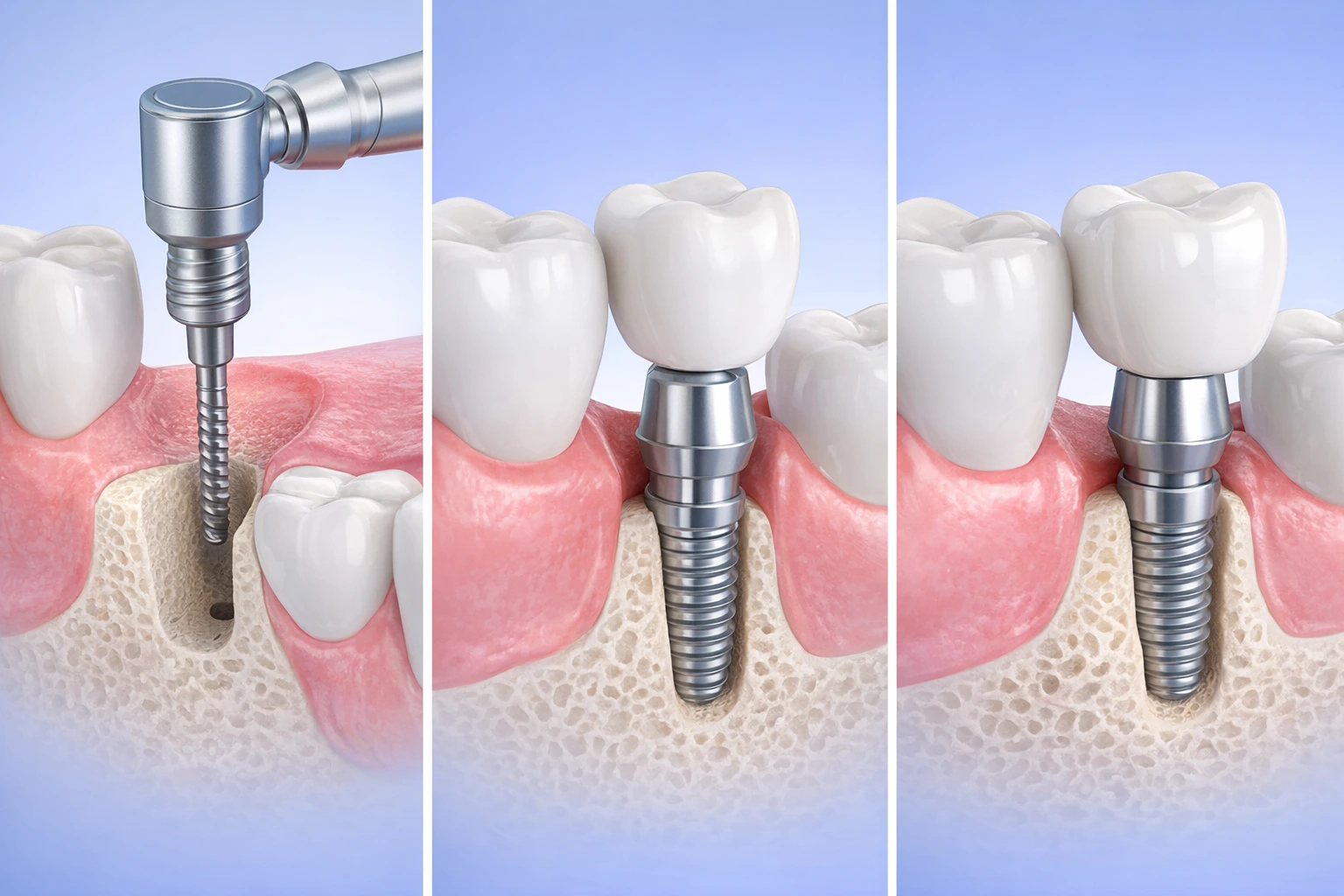
Why Dental Implant Brand Matters for Your Treatment
When you evaluate clinics, ask which brands of implants they use. Good clinics work with well-known implant brands that have a strong clinical track record, rather than unknown systems with limited long-term data.
Choosing the right implant brand directly affects the durability, safety, and long-term success of your treatment. An implant is meant to last for decades, so brand reliability matters.
Key questions to ask:
- Which implant brand and model will be used?
- How long has this implant system been on the market?
- What warranty or guarantee comes with the implant?
- Will replacement parts be available in 10, 20, or 30 years?
Premium implant brands may cost more, but this difference is usually small compared to the overall treatment price. The added peace of mind and long-term reliability often make the investment worthwhile. Your dental implant should last a lifetime—choose a brand with a proven track record to protect your results.
Who Is a Good Candidate for Dental Implants?
Most healthy adults can get dental implants. During your consultation, your dental specialist will evaluate several factors to determine whether you are a suitable candidate for treatment.
Ideal candidates have:
- Adequate jawbone density to support the implant (or willingness to undergo bone grafting)
- Healthy gums free from active periodontal disease
- Good general health without conditions that impair healing
- Non-smoking status (or commitment to quit before and after surgery)
- Dedication to daily oral hygiene for long-term implant care
Who Should Avoid Dental Implants?
Certain conditions can make dental implant treatment more complex or, in some cases, unsuitable. If any of the following apply, additional evaluation or alternative treatments may be required.
- Uncontrolled diabetes (impairs healing and increases infection risk)
- Heavy smoking habit (2–3× higher failure rates than non-smokers)
- Active gum disease (must be treated before implant placement)
- Bisphosphonate medication use (linked to jawbone complications)
- Severely insufficient bone without grafting options
Your specialist will need a complete medical and medication history to determine suitability. However, advances such as zygomatic implants and All-on-4 techniques now allow many patients previously considered unsuitable to receive implant treatment.
Best Age for Dental Implants
The minimum age for dental implants is typically 18 for men and 16–17 for women, once jaw development is complete. Placing implants before this stage can lead to complications as the bone continues to grow. Temporary solutions are available for teenagers until they are ready for permanent implants.
There is no upper age limit for dental implants. Healthy patients in their 70s, 80s, and beyond can achieve successful outcomes. That said, age should always be discussed during your consultation.
Research indicates that patients over 60 may have around twice the risk of implant failure compared to those under 40. However, overall failure rates remain low at all ages, and age alone is not a reason to refuse treatment. This simply means your specialist may plan more carefully and include age-related factors in informed consent.
What matters more than age is overall health and bone quality. Factors such as uncontrolled diabetes or smoking have a greater impact on success than age itself. Many healthy seniors enjoy excellent long-term results with dental implants.
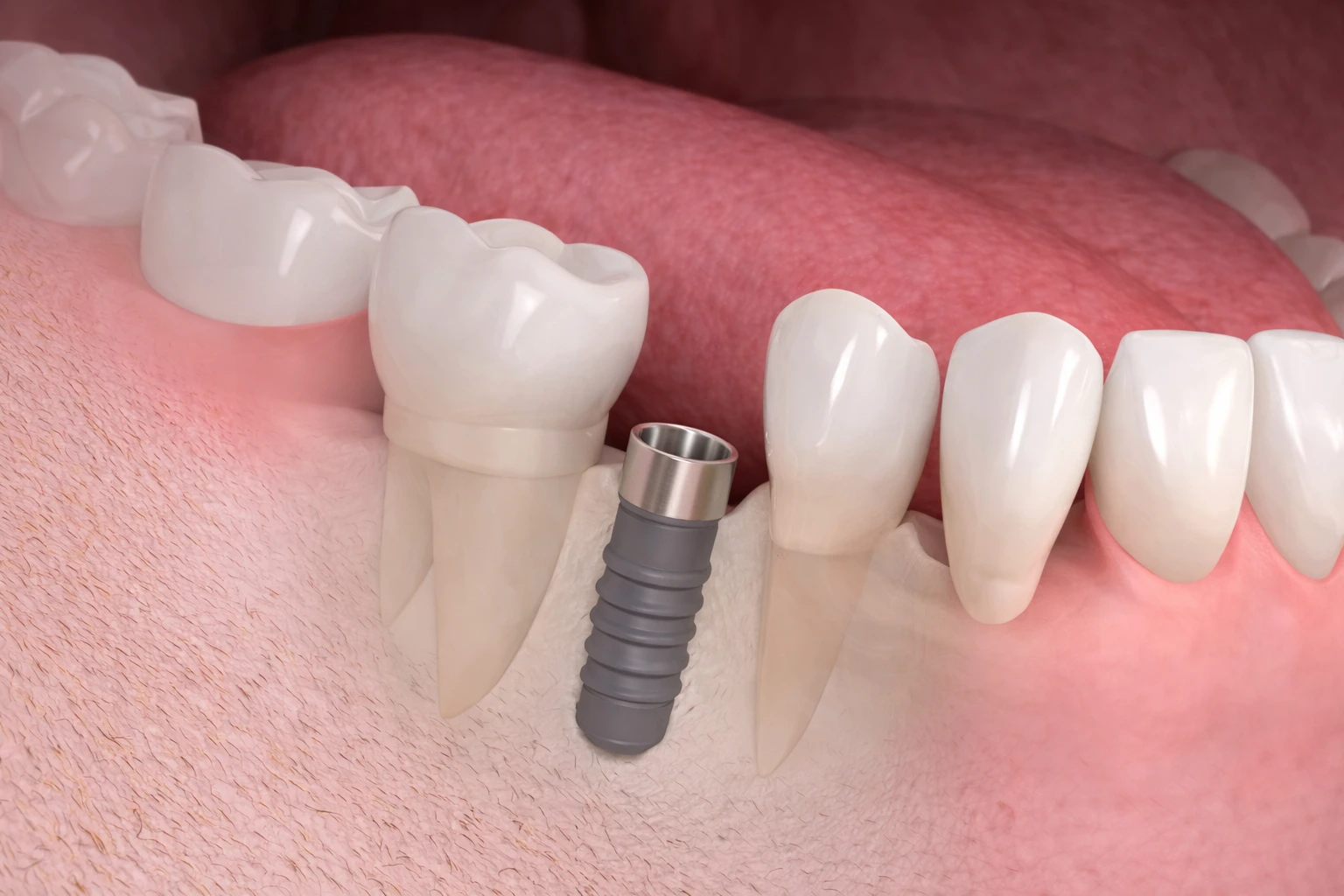
The Dental Implant Procedure Step by Step
Understanding the dental implant process helps you prepare both mentally and practically for treatment. While every case is unique, most patients follow a similar journey from the initial consultation to the final restoration.
The typical dental implant journey:
- Initial Consultation: Examination, 3D imaging, and a customised treatment plan
- Preparatory Procedures (if needed): Tooth extraction, bone grafting, or sinus lift
- Implant Placement: Titanium post surgically inserted into the jawbone
- Osseointegration: 3–6 month healing period as the bone fuses with the implant
- Abutment Placement: Connector piece attached to the implant post
- Final Crown: Custom-made prosthetic tooth fitted and adjusted
Dental Implant Consultation and Treatment Planning
Your dental implant journey starts with a thorough evaluation. The specialist will check your mouth, review your dental and medical history, and discuss your goals and concerns.
Advanced imaging plays a crucial role in accurate treatment planning. X-rays reveal the basic bone structure, while 3D cone beam CT (CBCT) scans provide detailed views of bone density, nerve pathways, and sinus locations. This technology allows your specialist to plan precise implant placement for optimal results.
You will receive a personalised treatment plan outlining each stage of the procedure, the expected timeline, and associated costs. This consultation is the ideal time to ask questions and fully understand what to expect.
Preparatory Procedures (If Needed): Bone Grafting & Sinus Lift
Some patients require preoperative treatment before dental implant placement, while others do not. Your clinical examination and imaging results will determine whether preparatory procedures are necessary.
If the tooth to be replaced is still present, it will need to be removed first. Following extraction, the area must heal, which typically takes 6 to 8 weeks. In selected cases, immediate implant placement may be possible.
Bone grafting is recommended when there is insufficient jawbone volume. Grafting material may be sourced from your own body, a donor, or synthetic materials and placed in areas lacking bone. The graft usually requires 3 to 6 months to integrate before implant placement.
A sinus lift procedure is performed in the upper jaw when the sinus cavity extends into the area needed for implant placement, creating adequate space for secure implant support.
Dental Implant Placement Surgery
Dental implant surgery is typically performed under local anaesthesia, though sedation options are available for anxious patients. The procedure usually takes 30 to 60 minutes per implant.
The surgeon makes a small incision in the gum to access the jawbone and uses precise drills to create a channel matching the implant size. A titanium post is then carefully placed into the bone, and the gum tissue is closed over or around the implant.
Most patients experience less discomfort than expected, often comparing it to a simple tooth extraction. You will leave the clinic with clear aftercare instructions and any necessary medications.
Osseointegration and Healing Period
The healing phase following implant placement is critical to long-term success. Over the next 3 to 6 months, the jawbone gradually bonds with the titanium implant in a process known as osseointegration.
During this period, follow-up visits allow your specialist to monitor healing. Depending on your case, the implant may remain covered by the gum or be fitted with a temporary crown. You will also receive guidance on diet and activity restrictions.
Patience during osseointegration is essential. Loading the implant too early can disrupt healing and significantly increase the risk of implant failure.
Dental Implant Abutment Placement
Once osseointegration is complete, the dental implant abutment is attached. If the implant was placed beneath the gum, a minor procedure is performed to expose it.
The abutment serves as the connector between the implant and the crown. After it is secured, the gum tissue is shaped around the abutment over approximately two weeks to form a natural-looking gum line.
Final Crown Placement
Your dentist will take precise impressions of your mouth so a dental laboratory can fabricate a custom crown that matches your natural teeth in shape, size, and colour.
At the final appointment, the crown is attached to the abutment. Your dentist checks your bite and makes any necessary adjustments. You leave with a fully functional, natural-looking tooth that restores both aesthetics and chewing ability.
How much do dental implants cost?
The table below shows the cost range of different types of dental implant treatments in different countries:
| Treatment Type | Turkey | UK | USA |
|---|---|---|---|
| Single Tooth Implant (varies by brand) | €300–€1,150 | £2,000–£3,500 | $3,000–$5,500 |
| Multiple Implants (3 teeth) | €900–€3,450 | £5,000–£9,000 | $8,000–$15,000 |
| All-on-4 (per arch, implants + prosthesis) | €1,900–€7,000 | £10,000–£25,000 | $20,000–$35,000 |
| All-on-6 (per arch, implants + prosthesis) | €2,500–€9,500 | £12,000–£30,000 | $25,000–$45,000 |
| Subperiosteal (per implant) | €900–€1,700 | £3,000–£5,000 | $3,500–$6,500 |
| Zygomatic (per implant) | €1,700–€3,500 | £6,000–£10,000 | $8,000–$15,000 |
Dental Implant Costs in the USA
In the United States, dental implant prices are among the highest in the world. A single dental implant typically costs between $3,000 and $5,500. Prices can vary significantly by state and city, with major metropolitan areas such as New York, Los Angeles, and San Francisco often exceeding $6,000 per implant.
A full-mouth All-on-4 restoration in the USA generally costs between $20,000 and $35,000 per arch. When both the upper and lower jaws are treated, total costs commonly range from $50,000 to $90,000 at established dental practices, with premium clinics charging even more.
These high prices are driven by factors such as malpractice insurance, dental school debt, laboratory fees, staff wages, and facility costs. Since most dental insurance plans offer little to no implant coverage, patients usually pay the majority of expenses out of pocket.
As a result, many American patients explore dental tourism. A full-mouth implant treatment costing $70,000 in the USA may be available for $12,000–$15,000 in Turkey, often including flights and accommodation.
Dental Implant Costs in the UK
In the UK, a single dental implant (including the post, abutment, and crown) typically costs £2,000–£3,500. More complex cases involving bone grafting or sinus lift procedures can add £500–£1,500 per treatment.
Full-mouth restoration using All-on-4 implants generally ranges from £10,000–£25,000+ per arch. Treating both jaws can exceed £40,000 at premium clinics.
While dental care quality in the UK is high, the cost of comprehensive implant treatment places it out of reach for many patients.
Dental Implant Costs in Turkey
Turkey has become a leading destination for dental implants, offering 60–70% savings compared to the UK and the USA without compromising treatment quality.
A single dental implant in Turkey costs between €350 and €1,150, using internationally recognised implant brands. By comparison, the same treatment costs $3,000–$5,500 in the USA and £2,000–£3,500 in the UK.
Full-mouth All-on-4 treatment in Turkey ranges from €1,900–€7,000 per arch, compared to $20,000–$35,000 in the USA and £10,000–£25,000 in the UK.
Complete upper and lower jaw rehabilitation may cost $50,000–$90,000 in the USA, while the same treatment in Turkey often ranges from €5,000 to €15,000, including flights and accommodation.
Turkish clinics maintain lower prices due to reduced operational costs and favourable exchange rates, while using the same materials and techniques as Western clinics. High patient volumes also allow Turkish implant specialists to gain extensive experience.
What’s Included in Dental Implant Pricing?
Understanding what is included in dental implant pricing helps avoid unexpected costs. A comprehensive price should cover the initial consultation, 3D imaging, implant post, abutment, final crown, surgical placement, anaesthesia, follow-up appointments, and final crown fitting.
Always ask about additional procedures such as bone grafting, sinus lifts, temporary teeth during healing, and sedation. Reputable clinics provide a clear, itemised quote before treatment.
In Turkey, many clinics offer all-inclusive packages that cover treatment, airport transfers, and accommodation, making budgeting simpler for international patients.
Are Dental Implants Worth the Price?
Focusing only on the upfront cost of dental implants can be misleading. It is more important to look at long-term value. For example, a $3,000 implant lasting 25 years costs about $120 per year. In comparison, a $500 denture replaced every 5 years costs around $100 per year. While the yearly costs appear similar, dentures often come with ongoing issues such as inconvenience, bone loss, and reduced quality of life.
Dental implants provide benefits that go far beyond their price. They help preserve jawbone strength, unlike dentures and bridges, which can lead to bone loss and a sunken facial appearance over time.
Implants also restore natural chewing ability, allowing you to enjoy a full diet without restrictions. They eliminate the daily hassles associated with removable dentures—there is no need for adhesives, no soaking, and no risk of slipping.
That said, dental implants are not the right choice for everyone. They require surgery, a commitment to healing time, and consistent oral hygiene. The comparison table below highlights the key trade-offs to help you decide whether dental implants are a worthwhile investment for your specific situation.
| Advantages of Dental Implants | Disadvantages of Dental Implants |
|---|---|
| More cost-effective long-term than repeatedly replacing dentures | Higher upfront cost than dentures or bridges |
| Permanent solution that can last a lifetime | Requires surgery and several months of healing |
| Preserves jawbone and prevents facial collapse | Not suitable for patients with severe bone loss without grafting |
| Functions exactly like natural teeth, with no dietary restrictions | Multiple appointments needed over 3–6 months |
| No daily removal, adhesives, or special cleaning routines | Requires commitment to good oral hygiene long-term |
| Adjacent teeth remain untouched and healthy | Small risk of complications like infection or implant failure |
What Is the Success Rate of Dental Implants?
Dental implants have documented success rates of 95–98% across numerous long-term clinical studies, making them one of the most predictable procedures in modern dentistry.
Several factors influence individual success rates. Lower jaw implants generally have slightly higher success than upper jaw implants, where bone density is often lower. Non-smokers achieve more consistent outcomes than smokers, and patients with well-controlled systemic health conditions fare better than those with unmanaged issues.
Implant brand and surgeon experience also play a critical role. Premium implant systems supported by decades of research outperform budget alternatives, and specialists who place hundreds of implants per year consistently achieve better results than occasional providers.
Complications and Risks of Dental Implants
Although uncommon, dental implant complications can occur. Infection at the implant site affects a small percentage of patients and is usually manageable with antibiotics if detected early. Implant failure, where osseointegration does not occur, happens in approximately 3–8% of cases and may require removal and re-treatment.
Nerve damage can cause numbness or tingling in the lips, chin, or tongue, but this is rare with proper planning and imaging. In the upper jaw, implants placed near the sinuses carry a risk of sinus perforation, which is minimised through careful surgical technique.
Peri-implantitis, an inflammatory condition similar to gum disease, may develop years after placement if oral hygiene is neglected. Regular dental check-ups help detect early signs before bone loss compromises the implant.
How to Minimise Risks of Dental Implants
Selecting a qualified implant specialist with extensive experience is the most effective way to reduce risk. Always verify credentials, ask about annual case volume, and review before-and-after photos.
Follow all pre-operative instructions, especially those related to smoking cessation and medication management. Post-operative care is equally important—take prescribed medications, adhere to dietary guidelines, and attend all follow-up appointments.
Long-term success depends on excellent oral hygiene. Brush twice daily, floss carefully around implants, and maintain regular professional cleanings. With proper care, dental implants can last a lifetime.
What to Expect After Dental Implant Surgery
Swelling and mild discomfort are normal for 3–7 days following dental implant surgery. Ice packs and prescribed or over-the-counter pain medication usually manage symptoms effectively. Swelling typically peaks around day 2–3 before gradually subsiding.
Stick to soft foods during the first week, such as soups, smoothies, mashed vegetables, scrambled eggs, and yoghurt. Avoid chewing directly on the surgical site. Stay well hydrated, but avoid using straws, as suction can disturb healing tissues.
Minor bleeding is normal in the early phase. Avoid vigorous rinsing for the first 24 hours. After that, gentle saltwater rinses help keep the area clean. Most patients return to normal daily activities within 2–3 days, although strenuous exercise should be postponed for about a week.
Long-Term Care for Dental Implants
Caring for dental implants is very similar to caring for natural teeth. Brush twice daily using a soft-bristled toothbrush, paying special attention to the area where the crown meets the gum line. Daily flossing is essential—regular floss, interdental brushes, or water flossers are all effective.
Professional cleanings every six months remove plaque and tartar that cannot be reached at home. During these visits, your dentist will monitor implant health and check for early signs of peri-implantitis or other issues.
Avoid habits that place excess stress on implants, such as chewing ice, biting fingernails, using teeth as tools, or grinding and clenching. If you grind your teeth, a night guard can help protect your implants. With proper care, implants can function reliably for decades.
How Long Do Dental Implants Last?
The titanium implant post, once fully integrated and properly maintained, can last a lifetime. Long-term studies show implants still functioning well after 25+ years, with no inherent expiration date.
The dental crown (the visible part of the tooth) typically lasts 10–15 years before wear or aesthetic changes require replacement. Crown replacement is straightforward and far less invasive than the original implant surgery.
Implant longevity depends on factors such as oral hygiene habits, smoking status, grinding or clenching, and overall health. Patients who care for their implants properly can reasonably expect permanent, long-term results.
Where to Get Dental Implants
Where you receive dental implant treatment matters as much as the treatment itself. Quality varies significantly between providers, and your choice directly affects clinical outcomes, overall experience, and long-term value.
The most important factor is your specialist’s qualifications and experience. Look for dentists with dedicated implant training beyond general dentistry, such as oral surgeons, periodontists, or prosthodontists with a strong implant focus. Ask how many implants they place each year—higher case volume consistently correlates with better success rates.
Facility standards are equally important. Reputable clinics use advanced 3D imaging for treatment planning, follow strict sterilisation and infection-control protocols, and invest in modern equipment. Patients should feel comfortable asking about technology, hygiene standards, and safety procedures.
For cost-conscious patients, treatment location has become a major consideration. Dental tourism now allows access to high-quality implant care at significantly lower prices than in many Western countries—provided the destination and clinic are chosen carefully.
Dental Implants Abroad: Is Turkey a Good Option?
Turkey has emerged as one of the world’s leading destinations for dental tourism, welcoming hundreds of thousands of international patients each year. For dental implants in particular, the combination of clinical expertise, modern facilities, and substantial cost savings makes Turkey a highly attractive option.
Many Turkish clinics specialise in implant dentistry, use internationally recognised implant brands, and treat a high volume of cases annually—allowing specialists to develop exceptional skill and efficiency. When quality standards and surgeon experience are carefully verified, implant treatment in Turkey can offer outstanding value without compromising safety or results.
Why is Turkey popular for dental implants?
The cost advantage is undeniable: 60–70% savings compared to UK or US prices for equivalent treatment. But Turkey's appeal goes beyond price.
Turkish dental clinics have invested heavily in modern facilities, many achieving JCI (Joint Commission International) accreditation, the same standard as top US hospitals. They use premium implant brands recognised worldwide: Straumann, Nobel Biocare, and others with decades of research supporting them.
Turkish implantologists are often trained internationally and handle remarkably high case volumes. A busy Istanbul clinic may place more implants monthly than a UK practice places yearly. This experience builds expertise that benefits every patient.All-inclusive packages simplify the dental tourism experience. Airport pickup, hotel accommodation, treatment, and even city tours are bundled into transparent pricing. You know the total cost before you travel.
